The sound of my daughter’s thumb clicking the play button was the final nail in her father’s meticulously constructed coffin.
Static hissed through the kitchen speakers, then gave way to the sharp, practiced cadence of Garrett’s voice. He sounded like a man giving a briefing, not a father speaking to his child. The air in the room grew heavy, smelling of burnt toast and the stale, lingering scent of my own panic.
I leaned against the laminate counter, my hand hovering over a half-filled medical chart. My knuckles were white, the skin pulled tight over bone. I didn’t breathe.
“Tell the judge exactly what I told you,” the recording commanded. “The fridge was empty. Mom wasn’t home. Say it, Rosalie.”
My daughter sat at the table, her small shoulders hunched, staring at the crumbs of a bagel she couldn’t bring herself to finish. She didn’t look at me. She didn’t look at anything.
I realized then that my daughter had been living in a war zone I hadn’t even begun to map. I reached out, brushing a stray hair from her forehead.
“Is this all of it?” I asked.
She nodded, pressing ‘stop.’ We were finished pretending.
The clock on the wall clicked forward, a dry, rhythmic sound that dictated my entire existence. It was 5:45 AM, the hour when the city of Cleveland was still draped in a bruised, pre-dawn grey. I stood in the small galley kitchen of our rental, the linoleum cold against my bare feet. I focused on the coffee maker, listening to the rhythmic chug of water heating up. It was a domestic sound, a promise of wakefulness, entirely divorced from the digital rot I had just unearthed.
I measured two scoops of grounds into the filter. Precision was my comfort; the habits of a nurse, I suppose. I wiped a stray grain from the counter with the side of my thumb, my movements automatic.
“Mom?”
Colton stood in the doorway, his hair a chaotic nest of curls, clutching his worn stuffed rabbit. He looked small in the dim light.
“Go put your socks on, honey,” I said, my voice steady, betraying none of the acid eating at my stomach. “We have a long day.”
He nodded and vanished, his footsteps muffled by the threadbare rug. I poured the coffee. It was black, bitter, and hot. I drank it standing up, watching the steam rise. I thought about the shift ahead at the hospital, the routine of intake forms and vitals, the predictable trajectory of a day where the only emergencies were biological. It was a clean, manageable world. I decided then that today would be normal. I would drive them to school, I would sign the permission slips, and I would ignore the phantom vibration of my phone in my pocket. I would be the mother they needed, the one who didn’t look like she was unraveling.
The commute was a grey blur of windshield wipers and brake lights. The rain in Cleveland never really stopped; it just paused to reload. I gripped the steering wheel, my knuckles pale. In the passenger seat, Rosalie was quiet, her gaze fixed on the passing storefronts. She looked like a child again, not a witness, not a pawn. I turned on the radio to drown out the silence, a low hum of traffic reports and morning banter about the weather.
I dropped them off at the school gates, watching the sea of backpacks and yellow coats swallow them whole. I waited until I saw them reach the building before I shifted into gear.
The office was a frantic beehive of activity. I spent the morning running charts, dodging the lead surgeon’s demands, and nursing a lukewarm cup of tea at the station. The printer groaned and spat out pages—orders, patient histories, administrative directives. I staple-gunned them into neat packets.
“You look tired, Elena,” Sarah, the charge nurse, remarked as she walked past, her clipboard tucked under her arm. “Double shift?”
“Just the usual,” I said, offering a tight, professional smile. I didn’t tell her about the weight of the silver shoes in the drawer at home. I didn’t tell her about the recording. I just straightened a stack of files. I decided that as long as I kept moving, the ground wouldn’t give way.
The afternoon light bled through the fluorescent tubes, turning everything a sickly, sterile yellow. I was checking the inventory in the supply closet when it happened. A sudden, sharp vibration shattered the artificial peace. My phone, tucked into my scrub pocket, pulsed against my thigh. I pulled it out, my heart hammering a frantic, uneven rhythm against my ribs. It wasn’t the hospital line. It was an unknown number, glowing bright on the screen, demanding an answer.
I swiped the screen with a shaking thumb, pressing the device to my ear. The hallway air smelled of bleach and floor wax, a scent that usually grounded me, but today, it felt like it was closing in.
Mom? The voice was thin, reedy, and unmistakably Rosalie’s. She sounded like she was speaking from inside a tunnel.
Rosalie? Where are you? You’re supposed to be at the library.
I’m at Dad’s, she whispered. The silence on the other end was punctuated by the rhythmic, hollow tick of a grandfather clock I hadn’t heard since the divorce. He made me do it, Mom. He’s making me record the video again.
My pulse spiked into a dangerous, erratic beat. Every muscle in my body coiled, the instincts of a trauma nurse overriding the panic of a mother. I leaned my shoulder against the cold metal of the supply cabinet, squeezing my eyes shut to sharpen my focus. Stay calm, I told myself. If I lost the thread now, he’d tighten the noose.
What video, Rosalie? Tell me exactly what’s happening.
He has the camera on the tripod, she said, her voice hitching into a sob she clearly tried to stifle. He’s telling me to cry. He said if I don’t look sad enough about the house, he’s going to tell the judge I’m the one who broke the window. He’s putting the silver shoes in the frame.
The silver shoes. They weren’t just footwear; they were the props he’d bought to stage a narrative of poverty—of my neglect. Seeing them through her eyes, knowing he was using them to poison the court’s perception of our life, made my skin crawl with a cold, jagged fury. I thought about the trust fund papers, the way he’d been maneuvering to drain the accounts he claimed he wanted to protect.
Listen to me very carefully, I said, my voice dropping into a low, clinical command. Don’t look at the camera. Look at the shoes. When he tells you to start, count to three in your head. Then, reach out and touch the laces.
Why?
Because I need you to show them, I said, my grip on the phone tightening until my knuckles turned white. I need you to show exactly what he’s doing. Press the screen on the side of his phone, Rosalie. The one with the red dot. The one you use for your games.
There was a long, agonizing pause. I could hear his muffled, authoritative baritone in the background, a low rumble of instruction. Then, a sharp, metallic click—the sound of a digital recorder being engaged.
He’s coming back, she breathed.
Rosalie, hit that button, I urged, the hook of my fear pulling taut. Do it now, and then put the phone in your pocket. I’m coming to get you.
The line went dead, leaving me in the humming, yellow silence of the closet. I stepped out into the corridor, my decision already made. The fight wasn’t a custody battle anymore; it was a war.
I stood in the hospital corridor, my scrub top smelling of antiseptic and cold coffee. My fingers shook as I dialed Garrett’s mother. The phone vibrated against my ear, a frantic, hollow rhythm.
Marjorie, I said, not waiting for a greeting. Where is he? Rosalie and Colton. Are they with you?
There was a heavy, static-filled silence. Garrett? She sounded breathless, like she had just been running. He’s at the firm, Elena. He’s been in meetings all day. The children are at school. They’ve been at school since eight.
I checked my watch. My heart hammered against my ribs like a bird trapped in a cage. They aren’t at school, Marjorie. I just spoke to Rosalie. She’s with him.
Marjorie’s voice turned brittle, the tone she used when she was lying to preserve the family’s image. You’re confused, dear. You’ve been working too many hours. It’s affecting your memory.
I ended the call. My thumb hovered over the contacts again, landing on the desk line of the Fairmont Hotel, where Garrett kept a corporate suite. I needed to know if the room he claimed was for business was currently a stage for his performance.
Front desk. A man’s voice, smooth and disinterested.
I’m calling for Mr. Morrison’s suite, I said, trying to mimic the detached efficiency of a legal assistant. I need to confirm his checkout time for the cleaning crew.
One moment. The hold music was a tinny, upbeat jazz riff that made my teeth ache. Sir? I have a query about your departure time.
There was a muffled protest from the other end—a man’s voice, but not Garrett’s. It was the hotel concierge. We have no Mr. Morrison registered under that name, the clerk returned, his voice sharp now. And we don’t have any suites occupied by a party of three.
The discrepancy hit me like a physical blow. If he wasn’t at the hotel and he wasn’t at the office, he was moving them. He was keeping them in the slipstream of his lies, never letting them land in a place where I could reach them.
I pulled up the number for the nurse Garrett had hired to document the children’s health—a woman who had signed affidavits claiming I kept the house in disarray. I called her, my thumb hovering over the screen, then hit dial.
Mrs. Gable, I said, my voice steadying. This is Elena Morrison.
There was a sharp intake of breath. Mrs. Morrison. I have nothing to say to you.
I don’t want a statement. I want the truth. Where did he take them?
He didn’t take them anywhere, she snapped, her tone dripping with practiced disdain. He took them to the clinic for their check-ups. They are being evaluated as we speak.
The clinic? Which one?
She hung up. The dial tone was a flat, mocking sound.
I looked down at my hands. They were still stained with the ink of the hospital chart I had been updating ten minutes ago. I knew that clinic. It was a private practice on the edge of the city, one that served the firm’s partners.
I walked to the elevator, my decision hardening into something cold and leaden. I wouldn’t call a lawyer. I wouldn’t call the police yet. I would drive there myself. I reached the parking garage, my heels clicking sharply against the concrete. As I fumbled for my keys, my phone buzzed in my pocket. A new message from an unknown number. It was a photo of the back of a car, a sliver of a silver shoe visible on the floor mat.
I started the engine, the roar of the car filling the small, dark space. The game was failing, and he was cornered. I just had to reach them before he realized the recording was already running.
The highway stretched out like a vein of black ice under the streetlights. My hands gripped the steering wheel until my knuckles turned the color of bone. I had spent years scrubbing blood and bile from sterile tiles, learning that the body holds trauma long after the skin has stitched back together, but this was a different kind of wound. This was the slow, systematic dissection of my life, performed by a man who kept his scalpel in a velvet-lined box.
I pulled into the gravel driveway of his suburban fortress. The house was too bright, every window glowing with an aggressive, artificial warmth that mocked the dim, tired corners of my own apartment. I didn’t knock. The front door groaned under my weight, the brass lock turning with a soft, final click.
Inside, the smell of expensive cologne and lemon wax hung heavy in the air. I found them in the study. Garrett stood by the mahogany desk, his posture practiced and upright, his face smoothed into a mask of benevolent concern. Beside him, Rosalie sat in a leather armchair, her silver shoes swinging rhythmically, the metallic fabric catching the chandelier light. She looked small, hollowed out by the script she had been forced to memorize.
Garrett didn’t look up from his tablet. He held a glass of amber liquid, his movements fluid and rehearsed. He started to speak, his voice a smooth, low register designed to soothe a jury. He talked about my long shifts, the empty cupboards, the supposed instability of a mother who couldn’t keep her children fed. He was painting a portrait of a martyr, with me as the villain of his private stage.
I crossed the room, the rug muffling my steps. I reached out and took Rosalie’s hand. Her skin was freezing. She looked at me, her eyes darting toward the hidden camera lens tucked behind a row of leather-bound books.
I asked her, just once, if she was ready to go home.
Garrett laughed. He looked at her and said, Tell your mother why you’re staying with me, sweetheart.
The kitchen in our first apartment smelled of burnt toast and the sour, metallic tang of the radiator that never quite turned off. I was twenty-two, freshly minted with my nursing license and a belief that love was an architectural project—something you built, brick by heavy brick, until it was solid enough to withstand any storm. Garrett sat at the small, wobbly pine table, his fingers tapping a rhythmic, impatient cadence against the wood. He had spent the morning looking at brochures for high-end condos he couldn’t afford, his eyes tracing the floor-to-ceiling windows with a hunger that bordered on sickness. He looked up, his expression one of pained indulgence, as if my concern about the rent was a vulgarity I’d introduced into his high-minded life. I asked him how he planned to cover the down payment, and he simply smiled, a thin, razor-edged thing. He told me that wealth wasn’t about what you had in the bank, but the sheer, unwavering refusal to act like you were ever lacking. He walked out, leaving me to scrub the grease off the stovetop until my knuckles bled. I didn’t know then that the scrubbing was my life’s work.
My mother used to say that some men are born with a hollow space where their spine should be, and they spend their entire adult lives trying to fill it with other people’s achievements. I thought she was being cynical. I thought Garrett was just ambitious. I remember our wedding night, tucked into a rented suite in a hotel that smelled of stale floor wax. He didn’t want to talk about our future; he wanted to talk about his father’s old business associates, the ones he was certain would eventually recognize his brilliance. I sat on the edge of the bed, my white dress a heavy, suffocating weight, watching him practice his handshake in the vanity mirror. He practiced his smile, too—a soft, empathetic tilt of the head designed to make strangers feel seen, even when he wasn’t looking at them. I stood up to put a hand on his shoulder, to tell him I loved him for who he was, not who he wanted to pretend to be. He shimmied out from under my touch, his eyes never leaving the mirror. He told me to stop fidgeting. He said that successful men don’t need to be touched.
The shift happened in increments, the way erosion claims a cliffside. When Rosalie was born, Garrett didn’t see a child; he saw an audience. He would hold her, his posture rigid and performative, while he adjusted the lighting in the nursery to catch his profile just right. He began keeping a ledger, not of her growth or her health, but of her potential utility. He would tell me, in that voice he reserved for business deals, that if we played our cards right, if we curated the right social circle, she would be the leverage he needed to break into the private equity firm he’d been stalking for years. I asked him if he ever just wanted to play with her. He looked at me as if I’d suggested we throw our life savings into a furnace. He said, Elena, stop being so small-minded. Everything is a transaction. You just haven’t learned to account for the currency yet.
I remember the day the first real lie took root. We were at a family brunch, and Garrett had spent an hour coaching five-year-old Rosalie on what to say when her grandmother asked if we were happy. She was supposed to mention the vacations we hadn’t actually taken, the designer clothes we had borrowed from his sister and returned the next day. I found her in the hallway, clutching a velvet ribbon until her fingers were white, her eyes wide with a terror that no child should ever possess. She whispered that she had forgotten the name of the resort in the Bahamas. She sounded like a spy reporting a failure of intelligence. I knelt down, my scrubs still smelling of the hospital’s antiseptic, and I took the ribbon from her. I told her the truth didn’t need to be rehearsed. Garrett appeared in the doorway, his silhouette blocking out the light. He didn’t yell. He just looked at me with a terrifying, calm pity. He told Rosalie to go to her room, then leaned down to whisper that I was ruining the brand.
The bank calls started soon after, sharp, invasive rings that cut through the silence of our home like a guillotine. He had taken out a second mortgage, a secret secondary line of credit tied to the kids’ educational trust. When I confronted him, he didn’t apologize. He laid out a spreadsheet, the columns colored in vibrant, aggressive reds and greens. He showed me how our poverty was a tactical error on my part—a result of my refusal to leverage our status, my insistence on living like a common worker. He told me that if I would just sign the papers, he could fix it all. He could make us legitimate. I sat on the kitchen floor, the linoleum cold beneath my legs, and I saw the life I had built for our children—a life of stability, of love, of truth—being systematically dismantled to serve his ego. I signed the papers because I was tired. That was the mistake. The moment I signed, I gave him the knife he would eventually use to carve me out of their lives.
He began the campaign of staged neglect not out of malice, but out of necessity. He needed the world to see a mother who couldn’t cope, a woman so overwhelmed by her own insignificance that she couldn’t keep her children fed or clean. He would hide the groceries in the garage, then take photos of an empty pantry to show his lawyers. He would turn the heat off in the house and wait for the kids to shiver, then record their complaints to submit as evidence of my cruelty. He told Rosalie that if she told the truth—if she said we were happy, that we had enough, that we loved each other—she would be the reason we lost the house. He made her the guardian of his lies. He turned my own daughter into a double agent, forcing her to choose between her mother’s reality and her father’s performance.
I remember the last night before the separation. We were all in the living room, the lights dimmed to create the illusion of intimacy. Garrett was reading a book, his face composed in a mask of domestic serenity. Rosalie was sitting at his feet, her silver shoes tucked under her, staring at the floor. She looked like a bird in a cage, waiting for a signal that never came. I walked in, carrying a basket of laundry, the scent of lavender soap trailing behind me. I just wanted a moment of normal. I wanted to see them laugh at something stupid on TV. But the room was dead, suffocated by the weight of the script he had written for us. I looked at Rosalie, and for a split second, she looked back. There was no joy there, only a desperate, aching calculation. She was trying to figure out if she was playing her part well enough to earn his approval. I dropped the basket. The thud was loud, final, like a gavel hitting a bench. Garrett didn’t look up. He just sighed, as if my presence were an intrusion on his masterpiece. I realized then that he had already left us. He had replaced us with a version of us that served his narrative, and he would burn the house down to keep that version alive. I decided then that I would not be the ash. I would be the fire. I turned, walked out of the room, and began to pack the bags I had been hiding in the back of my closet for three years. The final hook was already set in my heart, pulling me toward a future where his stage would be empty, and I would finally be free to feed my children without having to justify their hunger to a ghost.
The linoleum floor of the hallway felt cold against my bare feet as I gathered the last of the folded laundry. In the living room, Rosalie sat cross-legged on the carpet, the glow of the tablet reflecting in her wide, unblinking eyes. She was twelve going on forty, her posture stiff with the weight of the secret she had finally decided to share. She had spent years memorizing Garrett’s scripts, mimicking the cadence of a neglected daughter to appease him, all while secretly cataloging his outbursts in a frayed spiral notebook. Her private contradiction was her desperation for his praise, a hunger that warred with her growing disgust for the lies he forced her to swallow. She looked at me, her thumb hovering over the play icon, and I saw a stranger looking back—a child who had outgrown the need for a father’s approval.
I knelt beside her, resting my hand on her shoulder. The fabric of her shirt felt thin, a reminder of my own struggle to balance shifts at the hospital with the relentless cost of living. My shame, the phantom weight I carried for every missed meal or generic brand box of cereal, suddenly felt irrelevant. I had spent years feeling like a failure because I couldn’t provide the polished life Garrett displayed in his staged photographs, but looking at Rosalie, I realized I had built something far more durable: a witness.
My son, Colton, drifted into the room, clutching his stuffed bear. He was eight, the youngest and most vulnerable, yet he possessed a quiet, observational power that Garrett had foolishly ignored. Colton had been the one to hide the grocery receipts, the pieces of paper that proved I was buying fresh produce while Garrett’s photos showed only empty cupboards he had deliberately staged. He didn’t understand the legal stakes, but he understood the concept of theft. To him, his father was a thief of truth. He leaned against the wall, watching his sister with a gravity that made him seem ancient. He was the moral compass of this fractured house, his existence a silent refutation of every narrative Garrett had spun to the social workers.
I pulled the tablet from Rosalie’s hand, feeling the heat of the battery against my palm. I knew that once I hit play, the life we had known—however precarious—would be incinerated. I thought of Judge Wendell, the man in the black robe who saw our poverty as a lack of character. He was a creature of order, a man who believed that domestic stability was measured in bank accounts and pristine living rooms. He was my greatest hurdle, a man whose own life was a series of carefully constructed perceptions, but even he could not ignore the raw, unedited audio of a man coaching his daughter to lie about the taste of her own mother’s cooking.
I looked at my children, their faces illuminated by the device that held the power to destroy their father. The air in the house grew thin, pressurized by the impending fallout. I realized that my own transformation from a defensive victim to an empowered mother wasn’t a solitary journey; it was a collective reclamation. I pressed the screen. The room filled with Garrett’s voice, cold and precise, directing a child on how to ruin a parent. I did not cry. I stood up, took the tablets and the notebooks, and walked toward the door. The foundation of our life had been built on his lies, but now, the ground was finally shifting. I opened the front door, the night air sharp and clean, and stepped out into the dark, ready to trade his stage for our reality.
The fluorescent lights of the precinct lobby hummed with a headache-inducing frequency. I sat on a bench of bolted-down plastic, the weight of the digital tablet in my bag feeling like a lead brick. Beside me, the air smelled of industrial cleaner and stale coffee. I pulled a crumpled tissue from my pocket, wiped my palms, and stood up as the desk sergeant looked over his spectacles. I didn’t offer a narrative. I pushed the tablet across the laminate counter and whispered, “I am reporting a pattern of systematic child abuse and financial coercion.” His eyes shifted from the screen to my face, his boredom dissolving into a sharp, professional focus as he reached for a form. The consequence was immediate; a notification pinged on my phone, a calendar invite from Garrett appearing out of thin air, a reminder of a lunch that would now never happen. He was watching the shared digital ecosystem. He knew I had crossed a line.
I left the station and drove straight to the bank. The teller had eyes like marbles, practiced in neutrality, but she paled when I slapped the court-stamped authorization for a freeze on the children’s trust fund onto her desk. I didn’t tremble. I watched her fingers move across the keyboard, the rhythmic clacking sounding like a countdown. “This account is restricted for internal audit,” she muttered, her voice dropping an octave as she avoided my gaze. I stood there until the confirmation slip printed, a tangible piece of paper that severed Garrett’s access to the only thing he truly worshipped. My phone buzzed in my pocket—a text from him. *You have no idea what you’ve started, Elena. Bring them to the house.* I deleted the message without reading it, the screen turning black and silent.
By noon, I was in a glass-walled office downtown, the smell of expensive leather and old paper filling the space. Mr. Henderson, a man whose suit cost more than my car, listened as I laid out the notebooks Rosalie had kept. He didn’t interrupt. He pulled a yellow legal pad toward him, his pen hovering like a scalpel. I told him about the staging, the forced photos, and the school secretary who had seen Garrett slipping notes into Rosalie’s backpack. When I finished, he looked at me, not with pity, but with the cold appraisal of a strategist. “If we file for an emergency hearing, he will lose his mind,” he said. “He will drag your name through every gutter he can find.” I thought of my kitchen, the way the children looked at their own shadows, and I nodded. “File it.” I signed the retainer, the ink bleeding into the expensive paper, a final, irrevocable commit.
That evening, the house felt like a bunker. I was in the kitchen, washing dishes, when the front door groaned open. Garrett didn’t knock. He stood in the entryway, his frame filling the space, his face a mask of performative fury. “You’ve made a mess, Elena,” he said, his voice a low, vibrating growl. He stepped further into the room, his eyes scanning the counters for the evidence he knew was gone. I didn’t turn around. I kept scrubbing a plate, the steam rising against my skin. “The police have the recordings, Garrett,” I said, my voice steady, stripped of the terror that used to paralyze me. “And the court has the financials. You aren’t a father here. You’re a liability.” He laughed, a brittle, hollow sound. “You think you’re so righteous. You’re just a nurse with a grudge and a dwindling bank account.” I turned then, looking him dead in the eye, seeing the panic hidden behind his arrogance.
He didn’t stay long. He left, but his shadow remained, heavy and suffocating. The next morning, the escalation turned public. My HR manager called me into the office before my shift began. The room was cold, the air thick with the unspoken tension of institutional scrutiny. “Elena,” she started, her fingers hovering over a stack of papers, “we’ve received a series of anonymous reports regarding your conduct at home. Claims of instability.” I felt the heat rise in my chest, a fire that had been smoldering for months. I reached into my bag and pulled out the medical logs—the exact, timestamped record of every hour I had worked, verified by the hospital’s own biometric clock-ins. I didn’t defend myself. I presented the data. “If you are questioning my fitness,” I said, my voice sharp enough to cut, “then you are questioning the hospital’s own oversight of my shifts. Let’s bring Legal into this.” She blinked, her expression shifting from accusation to caution. She took the papers, and I walked out, the hallway stretching before me like a runway.
I drove to the clinic for the DNA test, the final bridge burned. As the technician swabbed my cheek, I thought of the children waiting at school, their backpacks packed with the truth. The test was a formality, a weapon to dismantle the last of his legal leverage regarding our history, but it felt like a surgical extraction of a parasite. My phone erupted with notifications—emails from the school, a frantic call from his lawyer, a blocked-number alert that I knew was him. I put the phone on silent, the world falling away into a blessed, golden quiet. I looked at the technician, a young woman with a weary, kind smile. I didn’t say thank you. I just stood up, my coat heavy on my shoulders, and walked toward the exit. The sunlight hit the pavement, blindingly bright. I was no longer the victim of the narrative; I was the one writing the final act. I started the car, the engine turning over with a steady, defiant hum, and pulled out into the traffic. I wasn’t going home to hide. I was going to collect my children, and then I was going to court.
The courthouse steps were a gauntlet of flickering camera flashes and voices that sounded like static. I gripped Rosalie’s hand so hard my knuckles burned, while Colton clung to the hem of my coat, his head ducked against the wind. The footage Rosalie had uploaded—the audio of Garrett dictating her lines, his voice dripping with that practiced, paternal velvet—had gone viral by dawn. Now, the public had turned. The same neighborhood mothers who had pointedly looked away at the grocery store a week ago were shoved behind police barricades, their faces twisted into masks of performative outrage.
I stopped at the bottom of the stairs to adjust Colton’s collar. A woman from the PTA, a woman who had once signed a letter questioning my fitness, lunged forward with a smartphone held high. Elena, is it true he offered you hush money? her voice was shrill, hungry for a soundbite. I looked at her, then past her at the sea of lenses. My pulse was a steady, rhythmic thud against my ribs. I didn’t owe them a performance. I wasn’t the martyr anymore, and I wasn’t the charity case. I was a mother who had just reclaimed her life from a thief. I didn’t answer. I just kept walking, my boots striking the concrete with a sound like iron.
Inside the sterile, wood-paneled hallway of the family court, the air smelled of floor wax and old secrets. My phone, tucked into my scrub pocket, vibrated incessantly. I pulled it out, thumbing the screen to silence. A text from my sister, who hadn’t spoken to me in six months: I saw the news. Can I come over? I deleted the message without a flicker of hesitation. The trust I had built for years had been eroded by Garrett’s lies, and I had no patience left for those who waited until the truth was convenient to offer their support.
We reached the courtroom doors just as Garrett’s attorney emerged, his silk tie disheveled, his face drained of its usual condescending color. He didn’t look at me. He looked at the floor, his briefcase clutched like a life raft. A moment later, the double doors swung open, and Garrett stepped out. He looked smaller than I remembered. The tailored suit didn’t sit right; he looked like a man wearing his own skin as a disguise that had finally been peeled away. He caught my eye, his mouth opening to form a plea or a threat, but I turned my back. I focused on Rosalie, watching as she exhaled a breath she seemed to have been holding for a lifetime.
I decided then. I wasn’t going to look back at the wreckage. I leaned down to the children, my voice low and steady. We are leaving the moment the judge signs the papers, I said, looking into their eyes. No interviews. No social media. We go home, and we lock the door.
The hook hit me then, a sharp, physical pull in my gut. The courtroom bailiff signaled for us to enter, but my phone vibrated again. A notification from the school district: The board of directors has placed the principal on administrative leave pending an inquiry into the Morrison case. The fallout was no longer just mine; it was rewriting the town. I walked through the doors, ready to finalize the end.
The wood of the bench felt hard and unforgiving against my thighs, a stark contrast to the hollow lightness blooming in my chest. Judge Wendell sat at the dais, his spectacles sliding down his nose as he reviewed the final stack of documents. The air in the courtroom tasted of floor wax and stale nerves. I watched his pen move—a swift, decisive scratch across the paper—and the weight of three years lifted with the ink.
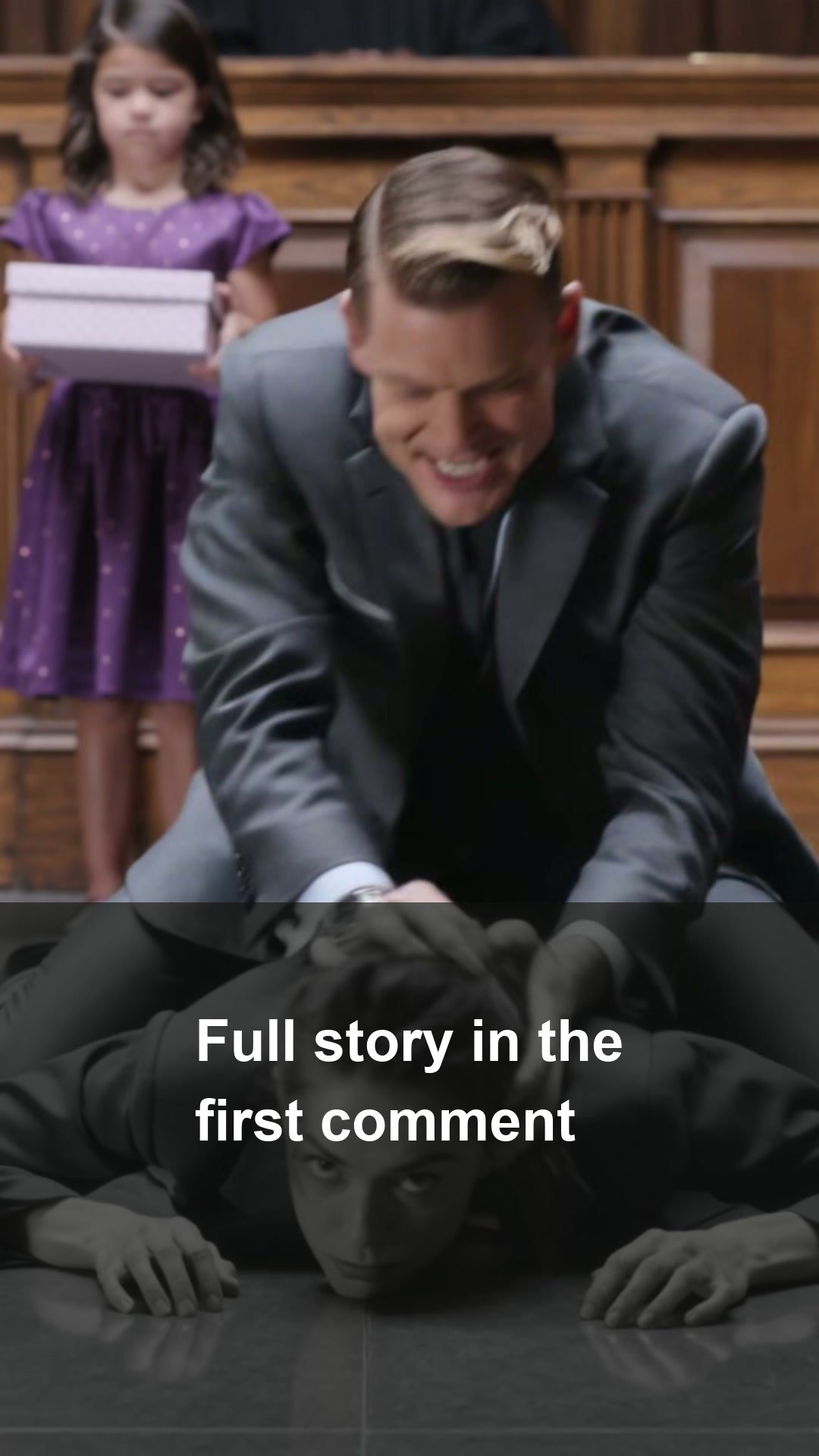
Full custody. No supervised visitations. An immediate, permanent order of protection shielding the children from his reach. My hand brushed against Rosalie’s arm, and she leaned into me, her shoulders finally dropping from her ears.
The judge looked over the rim of his glasses, his gaze lingering on the children before settling on mine. He didn’t offer a smile, just a slow, solemn nod that acknowledged the quiet violence we had survived. I stood, my legs feeling strangely heavy, and took the physical copy of the order. I folded it once, twice, and tucked it into the side pocket of my purse, right next to my scrub cap.
Garrett remained at the defense table, his spine slumped. His lawyer was already packing a briefcase, glancing at his watch with practiced indifference. The man who had spent months constructing a reality of my incompetence didn’t look at me. He looked at the floor, his face devoid of the performative charm he used to wield like a weapon. He was a ghost in his own life now, dismantled by the very truth he tried to bury under layers of fabricated neglect.
I turned away, my boots clicking firmly against the linoleum. Outside, the Cleveland sky was a bruised, honest gray. We walked to the car without speaking. The silence wasn’t the heavy, suffocating kind we were used to; it was the quiet of a house that had finally stopped holding its breath.
I fumbled for my keys, the metal biting into my palm. I thought about the cardboard box sitting on the kitchen counter—the one filled with his fake evidence folder, waiting to be emptied into the trash bin. The thought of it, the sheer mundanity of discarding his obsession, felt like a ritualistic cleansing. We were going home to a quiet dinner. No one would be watching. No one would be taking notes on our leftovers or the dust on the baseboards. I unlocked the car door, the chime signaling a fresh start, and held it open for my children. The path ahead was long, but for the first time, it was ours alone. I sat in the driver’s seat and finally switched my phone to silent.
The kitchen air smelled of burnt garlic and over-boiled pasta, a scent that felt like a triumph. I watched Rosalie dump the folder’s contents into the trash—the staged photos of our empty pantry, the fabricated logs of my absences—and heard the heavy thud of the lid closing. No one spoke. We sat at the small, scarred table, and for the first time in three years, the silence wasn’t a tactical weapon.
Rosalie reached for a second helping of buttered noodles. Her silver shoes were tucked under her chair, the buckles catching the dim overhead light. She looked at me, her eyes tracking the movement of my hand as I poured milk into Colton’s glass.
Are we going to keep the box, Mom? she asked. Her voice lacked that forced, brittle quality she’d developed to appease her father.
I set the carton down. No. It’s trash now.
Colton pushed his plate away, a small smile playing on his lips. Can we go to the park tomorrow? The one with the sand? I want to find more sea glass.
I looked at my son, whose small face had finally shed its permanent mask of anxiety. We can, I said. We can go every day if we want.
The weight in my chest, a cold, dense stone that had lived there since the divorce, shifted. It didn’t disappear, but it fractured. I realized then that my worth wasn’t tied to his bank account or his polished lies. It was in the way the children breathed—slow, deep, and without checking the door.
I took a bite of my own meal, the taste surprisingly vibrant. I’ll clear the table, I said, standing up. Why don’t you two pick a movie? Something loud.
As I scraped the remaining pasta into the bin, I felt the sharp prick of tears. I didn’t fight them. I just let them fall into the sink, quiet and private. Tomorrow, we would start the long, slow work of being ordinary.
I walked to the hallway closet, my feet heavy and silent on the worn floorboards. The cardboard box that had been the epicenter of our nightmare sat on the shelf, stripped of the folders, the receipts, and the staged photos that once held the power to shatter our lives. It was light now, a hollow shell of someone else’s malice. I brought it to the kitchen table. Colton and Rosalie watched, their faces no longer braced for a reprimand. I set the box down between them. From the pockets of my scrub jacket, I pulled the handful of smooth, frosted sea glass and mismatched plastic trinkets we had gathered on the beach that afternoon. One by one, I tipped them into the cardboard, the pieces clattering softly like rain against the bottom.
Leave a Reply